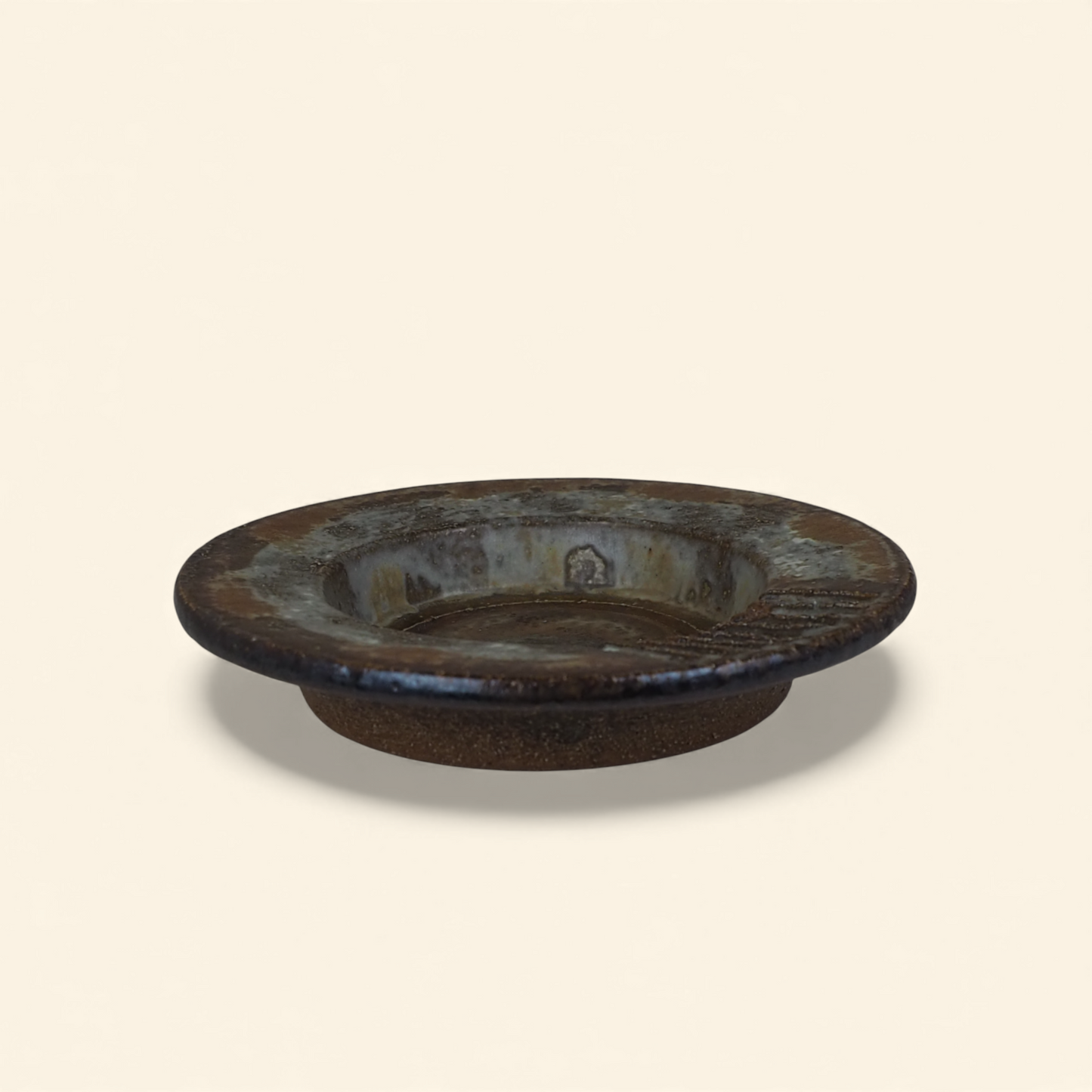
Axella brutalist stoneware plate | Denmark, 1970s
Axella brutalist stoneware plate | Denmark, 1970s
Couldn't load pickup availability
A stoneware plate produced by Axella in Denmark during the 1970s. The piece embodies the Brutalist ceramic sensibility that emerged in Scandinavian studio pottery during this decade – a deliberate rejection of refined, smooth surfaces in favour of raw, expressive texture.
The substantial form and organic surface treatment position this plate within a broader movement that valued material honesty and tactile presence over decorative polish.
SKU:SER-191
Key features
Key features
Condition
Condition
Dimensions
Dimensions
Perfect for
Perfect for
Shipping & pickup
Shipping & pickup
SLOY quality standard
SLOY quality standard
All vintage objects are carefully inspected and cleaned before sale. We ensure every piece meets our standards for authenticity and condition.
Manufacturer
Manufacturer
Axella was a Danish ceramics studio, producing stoneware objects characterised by heavy forms, rough textures, and earth-toned glazes. The studio's work aligned with a broader Nordic interest in brutalism – a term borrowed from architecture to describe ceramics that emphasised mass, surface irregularity, and unrefined materiality. Unlike the smooth, functional pottery associated with earlier Scandinavian modernism, Axella's output treated each piece as a sculptural object first. The studio's production remained relatively small, lending its surviving pieces a certain scarcity among collectors of the period.